
What API-first means for a DAM
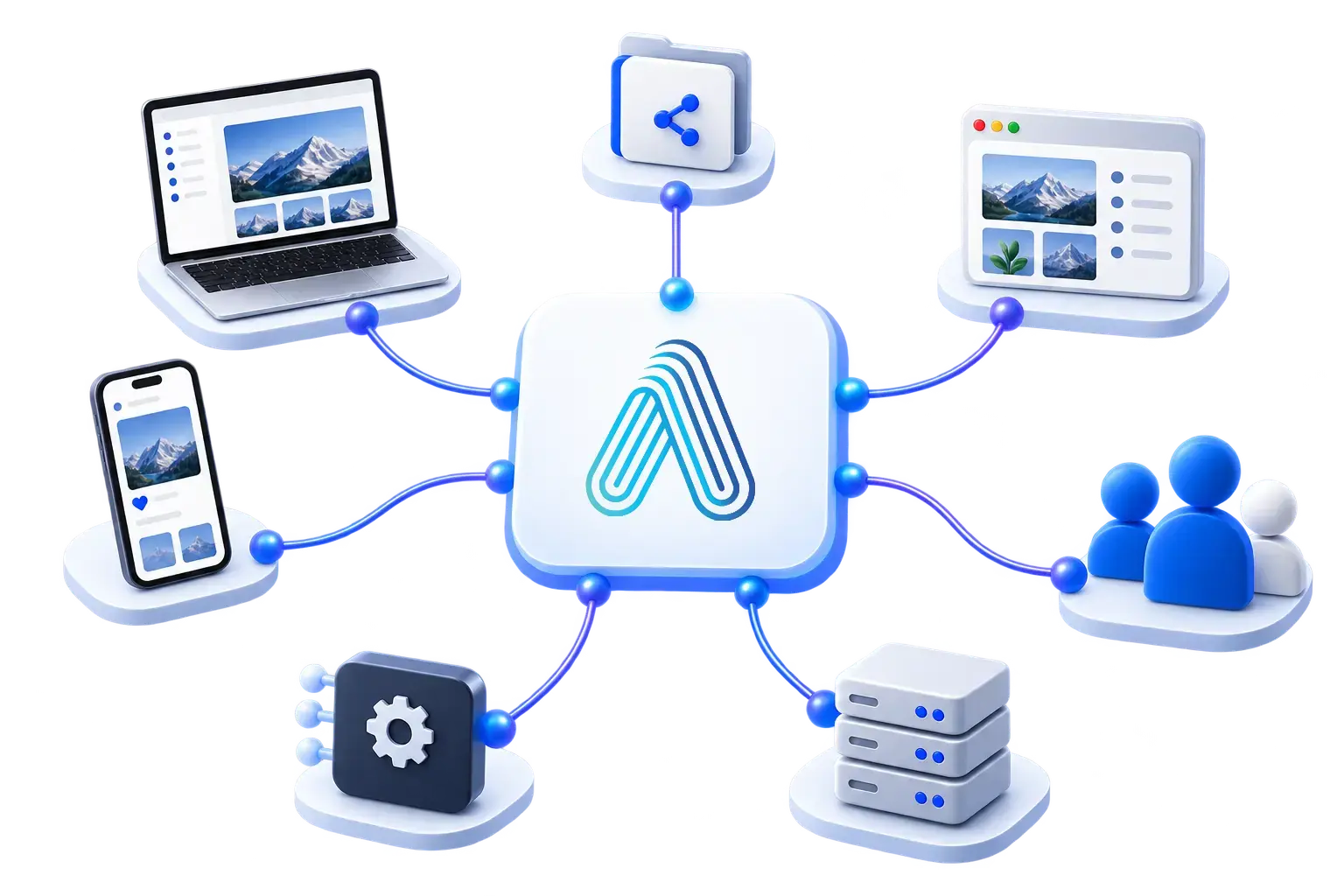
With API-first, functions are built as an interface first. The user interface uses the same interfaces as any other application. As a result, everything users can do in the DAM is also available to systems and automations.
That sets API-first apart from systems that add an API later for individual functions, for example only for upload and download.
Why this matters for a DAM
Media flows into web shops, PIM, CMS, marketing automation, mobile apps, intranets, and increasingly into AI workflows. With open interfaces, media is not copied but provided from one central source. Existing processes can be automated without bending the system.
For companies with many systems, brands, or partners, the quality of the interfaces often decides how well a DAM works in daily use.
How to recognize an API-first DAM
Coverage
Check whether all core functions such as assets, metadata, search, approvals, and rights are available through the API, not only upload and download.
Authentication
Whether API key, OAuth 2.0, or both: what matters is that applications can work on behalf of users with their rights, and that technical access is handled separately.
Documentation
A machine-readable description in OpenAPI or Swagger can be imported directly into your development tools.
Ready-made clients
Clients for common programming languages save development time and reduce errors during integration.
Access with a role
Every integration should have its own access with a role, so it only does what it is meant to do.
Operations and changes
Ask about limits, versioning, and how changes to the API are announced.
Costs
Clarify whether API access is included in the package or charged separately.
Typical integrations
In practice, the interfaces mainly serve web shops and PIM, headless CMS, marketing automation, mobile apps, and custom AI workflows. You will find more examples under Integrations.
How Agravity GlobalDAM implements API-first
Agravity GlobalDAM is built API-first from the ground up: what the user interface can do is built on interfaces. There are two interfaces. The Public API is secured with an API key and serves public shares, secure upload, and technical integrations. The Private API is available exclusively through OAuth 2.0, without an API key. It works on behalf of your users with the same rights as in the user interface.
Each customer gets a Swagger and OpenAPI description as JSON. Ready-made clients exist for TypeScript and Angular via npm and for C# via NuGet, and further languages can be generated with the OpenAPI Generator. Every integration receives its own access with a role.
API access is included in all packages, there is no separate API package. You will find details under Licensing models. The article “Why the API-First Approach Is the Future of Digital Content Systems” describes the basic idea.
Questions to ask vendors
- Are all functions of the user interface available through the API?
- How does authentication work, and can applications work on behalf of users with their rights?
- Is there an OpenAPI description and are there ready-made clients?
- Is API access included in the package, and are there limits or extra costs?
- How are changes to the API announced and versioned?
- Which integrations run through the API in practice, and are there references?
Frequently asked questions
What does API-first mean for a DAM?
Functions are built as an interface first, and the user interface uses them like any other application. As a result, all functions can also be used by systems and automations.
Which DAM systems have an API-first approach?
More and more vendors offer an API. What matters is whether it covers all functions and is included in the package. Check every vendor with the questions above. Agravity GlobalDAM is built API-first from the ground up.
Do I need developers to connect a DAM?
Not always for ready-made connections. For custom integrations, knowledge of REST interfaces helps. OpenAPI descriptions and ready-made clients reduce the effort.
Is API access included in the price?
With Agravity GlobalDAM, API access is included in all packages. With other vendors, you should check this explicitly.