
What is a MAM system?
MAM stands for Media Asset Management. The term is sometimes used generally for managing digital media. More narrowly, it describes systems for audio- and video-heavy production workflows in broadcasting, film, streaming, and post-production.
Large source files and time-based media are central. Specialist requirements often include production ingest, proxy files, timecodes, frame-accurate review, editing systems, and archives for large video and audio collections.
Why the term MAM causes confusion
The term MAM is not used consistently in the PIM market. Some PIM vendors call their integrated, often functionally limited media management a MAM. Other vendors and system integrators use the same label for comprehensive DAM systems.
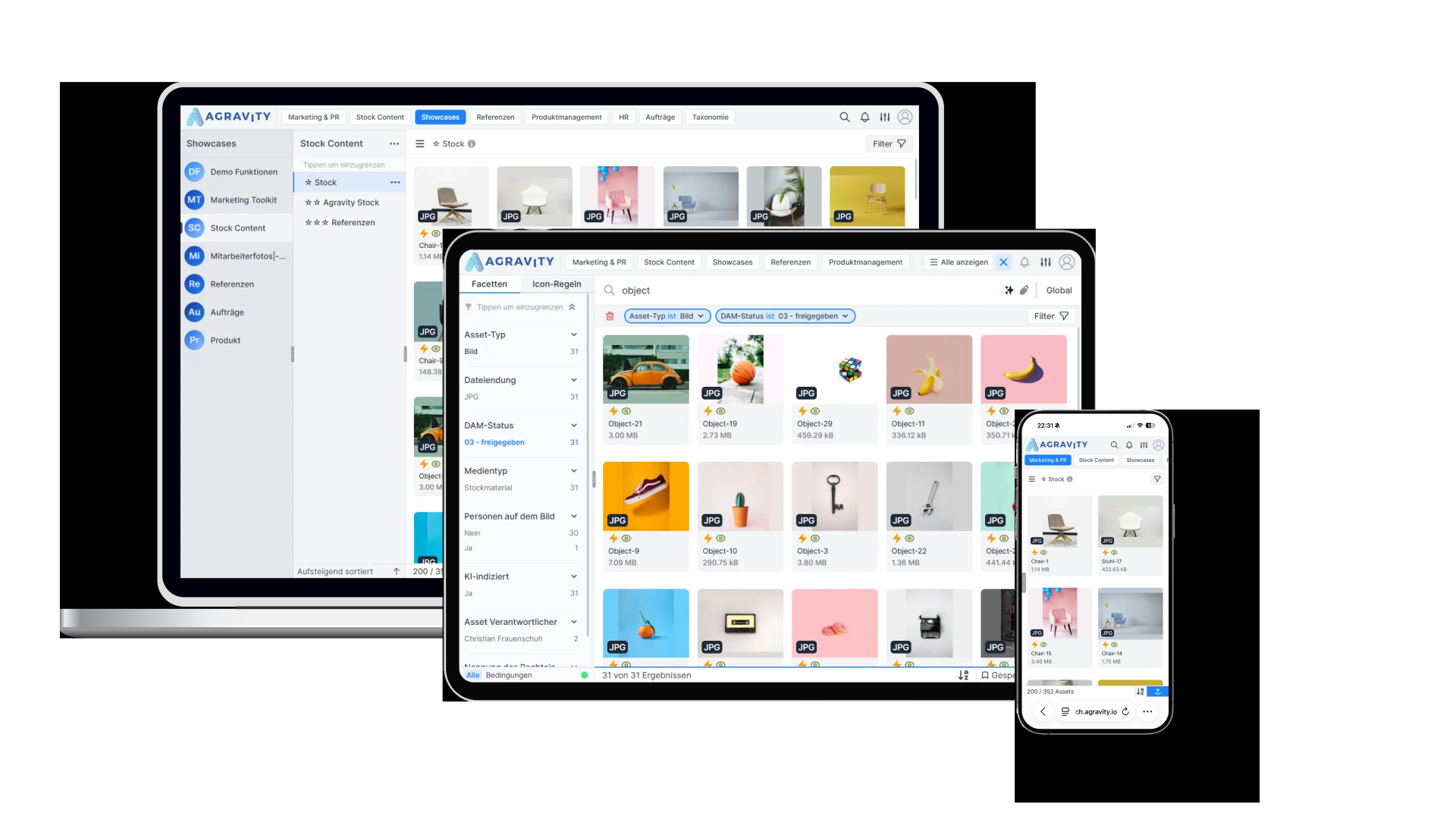
These DAM systems are standalone products such as Agravity GlobalDAM. They manage digital assets independently of the PIM and can usually be integrated effectively with PIM systems through APIs or connectors. The PIM remains responsible for structured product information, while the DAM manages and delivers the related images, videos, audio files, documents, and other media.
MAM can therefore describe a basic media function inside a PIM, a standalone DAM, or a specialist system for video and audio production. Companies should focus less on the label and more on the actual capabilities, system boundaries, and integration options.
What is a DAM system?
Digital Asset Management organises digital assets across a company. This includes images, videos, audio files, PDFs, presentations, office documents, layout and graphic files, and other formats. Metadata, search, versions, approvals, permissions, and delivery connect files with their business context.
DAM is often used by marketing, product communications, sales, e-commerce, and IT. It creates a reliable media collection that supplies teams, partners, and connected systems with current content.
MAM and DAM at a glance
| Criterion | MAM | DAM |
|---|---|---|
| Focus | Audio and video production | Company-wide media management |
| Typical content | Source footage, programmes, video and audio | Images, video, audio, documents, graphics, and other assets |
| Typical users | Broadcast, production, and post-production | Marketing, product, sales, agencies, and IT |
| Core processes | Ingest, review, editing, and production archives | Organisation, search, approval, sharing, and delivery |
| Integrations | Editing and production systems | PIM, CMS, shops, portals, and enterprise systems |
The boundaries are not always clear. Some providers use MAM and DAM interchangeably, and features can overlap. Actual workflows should therefore determine the choice.
When a specialist MAM makes sense
A MAM is particularly suitable when video or audio production is the core process. Examples include long recordings, many source versions, frame-accurate comments, direct hand-offs to editing suites, and specialised storage or archive strategies.
In these environments, a MAM can cover the production chain. A DAM can complement it by managing approved final versions for marketing, sales, and external channels.
When a DAM fits better
A DAM is usually the better choice when different media types need to be organised and distributed together. Product images, campaign videos, data sheets, presentations, logos, and training materials share one structure.
Connecting media with products, brands, markets, and channels is another reason to use DAM. Downloads, shares, portals, and APIs provide content to different audiences.
Questions for your decision
- Is ongoing video and audio production or company-wide media use the main focus?
- Do you need frame-accurate production features and direct editing-suite integration?
- Which images, videos, audio, documents, and other formats need to be managed together?
- Which teams, partners, and systems need access to approved content?
- Should media be connected with products, markets, or brands?
- Do you need portals, download variants, and API-based delivery?
Where Agravity GlobalDAM fits
Agravity GlobalDAM is a cloud-native DAM solution for centrally organising, finding, and delivering different digital assets. It manages video, audio, documents, and other file formats in addition to images. Flexible metadata, AI-assisted search, roles, approvals, portals, and APIs support company-wide media processes.
GlobalDAM is not a specialist broadcast production system. Where frame-accurate video editing, production ingest, or deeply integrated NLE workflows are central, we clarify which requirements should be handled by a specialist solution and how approved assets can then be used in the DAM.